
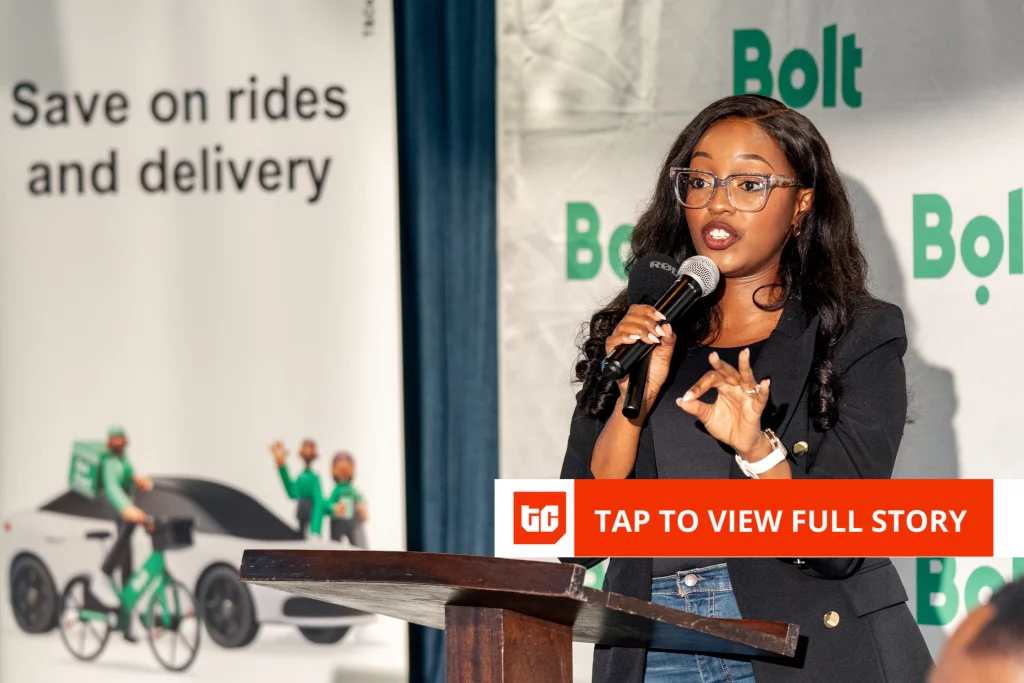
Bolt has rolled out a paid membership in Kenya, and one number on the price list has drawn more attention than the rest. Bolt Plus costs KES 280 ($2.16) a month, but the annual option is priced at KES 899 (about $7), a figure so low that it looks like a typing error. Bolt says it is correct.
The ride hailing and delivery company launched Bolt Plus in Kenya on 15 October, with the first month free. Members get cashback on rides, free delivery on eligible food and retail orders, priority driver matching, faster food delivery and three free ride cancellations each month. Bolt operates in nine Kenyan cities.
The monthly rate is not the striking part. The yearly plan works out to roughly KES 75 ($0.58) a month, well under the standard monthly price and even below the KES 119 ($0.92) introductory rate available for the first six months. When asked to confirm the KES 899 figure, Bolt said it was accurate and offered no further explanation beyond a wish for customers to consider the yearly subscription for better value.
Bolt Plus arrives in a market where two competitors already sell memberships. Uber One, launched by Uber in Kenya in March 2025 after a pilot the previous November, bundles rides, food and groceries at KES 280 ($2) a month or KES 2,800 ($22) a year. Glovo Prime links customers to restaurants, supermarkets and shops and costs KES 400 ($3) a month, covering delivery only.
Set beside the free first month and the introductory rate, the annual pricing points to a company more interested in locking in a long commitment than in collecting the fee itself. That approach has obvious appeal for customers, though it also carries trade offs that Bolt’s announcement did not discuss.
Annual plans usually work in the seller’s favour, because the money lands up front. Once a customer has paid for a year, there is little incentive to open a rival app, so a discount deep enough to secure that commitment can recover its cost through loyalty. At KES 899 ($6.92), Bolt’s yearly plan costs less than a third of Uber One’s annual price.
The bundle adds another layer to the calculation. Glovo Prime has to earn back its fee on food and grocery orders alone, offering unlimited free delivery at participating outlets with an average saving that Glovo puts at KES 150 ($1.15) per order. Bolt Plus and Uber One, by contrast, pair rides with delivery, which gives members two reasons to open the same app and gives the company two routes to recover the discount. A customer who takes a ride to work and orders lunch through one app is plausibly worth more than someone who uses it for only one of those things.
Bolt is competing on service as well as price. Priority driver matching, faster food delivery and free ride cancellations are extras that do not appear among the benefits Uber lists on its Kenya page.
The low entry cost also limits the risk for riders. At about KES 75 ($0.58) a month, a regular user would not need to spend much on trips before cashback covered the fee. A single food order earning the maximum free delivery saving of KES 200 ($1.54) would repay close to three months of that outlay.
For now, the pricing stands as Bolt described it, with no further detail on how the company settled on KES 899 for a year of membership. What is clear is that the offer leans heavily on commitment rather than fee revenue, and the trade offs that come with that bet remain unaddressed.



