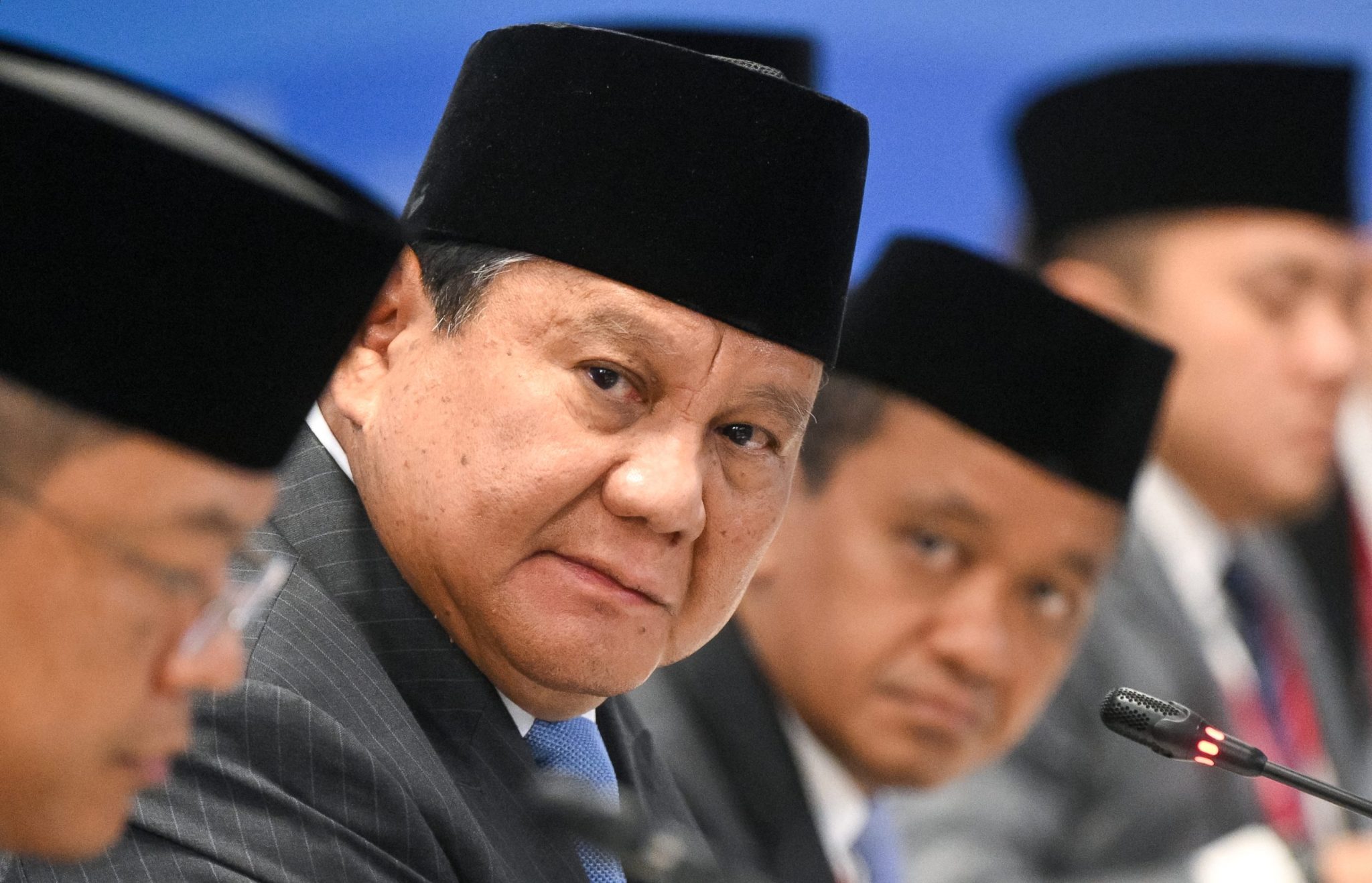
Indonesian President Prabowo Subianto has responded defiantly to MSCI’s proposal to strip Indonesia of its emerging market status, telling his cabinet that the country will not be intimidated by the index provider. The warning came as the proposed reclassification, market losses and falling public approval converge on his administration.
In an address to his cabinet, Prabowo said Indonesia was facing pressure from several directions, including MSCI. “Our country continues to face all sorts of disturbances, including the MSCI. They are trying to intimidate us,” he said. “I simply want to tell MSCI: the Indonesian nation fears no one and will never back down.”
“We have the strength, the courage and we are willing to make sacrifices, and we refuse to surrender,” he added.
On Oct. 15, MSCI said it was considering downgrading Indonesia to “standalone” status, a move that would exclude the Southeast Asian country from its major global and regional indexes. The proposal would put Indonesia in the same category as Argentina, Nigeria and Ukraine. MSCI cited “continued suspected coordinated trading behavior and lack of evidence of meaningful enforcement.”
The stakes are high because many investors use MSCI indexes as the basis for their funds. A downgrade could send billions of dollars of investment out of Indonesia. A final decision on the country’s status is due by the end of June 2027.
Indonesia has spent most of 2026 under the threat of a downgrade. In January, MSCI said it was considering lowering the country to “frontier” status, one rung below its current “emerging” status. That step threatened to pull as much as $13 billion in passive investment flows from Indonesia. The current proposal, which would place Indonesia below “frontier,” would likely lead to even greater outflows.
The market has already reacted. The Jakarta Composite Index is down by more than 10% since MSCI announced its proposal, and the benchmark index is down nearly 40% for the year so far.
The reclassification is only the latest challenge for Prabowo, who is now entering his third year in office. His approval rating has fallen to 44.5%, according to a poll from Saiful Mujani Research and Consulting cited by Reuters, mainly because of public dissatisfaction with the state of the economy. The same pollster put his approval at 81% in November.
More than six in 10 Indonesians say they are unhappy with the free meal program, one of the president’s flagship social policies. 71% also doubt that his village cooperatives policy will succeed. That plan aims to establish hubs in roughly 80,000 communities to handle basic goods distribution, savings and other rural services.
Wildfires in Indonesia are also producing widespread haze across much of the region, making Southeast Asian cities such as Singapore and Kuala Lumpur among the world’s most polluted. Singapore is now threatening to prosecute companies responsible for the fires.
Prabowo recently admitted that he is open to foreign help to control the fires, but he has also bristled at criticism. “Indonesia is a polite and patient nation. Our country is often insulted, but believe me, our nation does not want to be insulted all the time,” he said at Wednesday’s cabinet meeting.
Indonesians are increasingly protesting his administration. Reuters reported that more than 9,000 police officers were deployed across Jakarta this week, ahead of events marking Prabowo’s second year in office.
The market turmoil is now becoming a diplomatic issue. Former trade minister Muhammad Lutfi, who served under presidents Susilo Bambang Yudhoyono and Joko Widodo, accused Singapore state investors Temasek and GIC of pressuring MSCI to trigger a selloff so that foreign investors could “scoop up our strategic assets at discounted prices.” Both entities denied the allegations, with a Temasek executive calling them “patently untrue.”
Indonesian market officials are now trying to contain the damage. Jeffrey Hendrik, president director of the Indonesia Stock Exchange (IDX), pushed back against the conspiracy claims on Oct. 20. “We have always believed, and continue to believe, that global index providers are independent,” Hendrik said.
Prabowo’s defiance sets up a long wait for Indonesia, with MSCI’s final decision not expected until June 2027. In the meantime, the president faces a market under strain, a public mood souring over economic policy and a dispute with Singapore that has turned a financial review into a diplomatic flashpoint.