
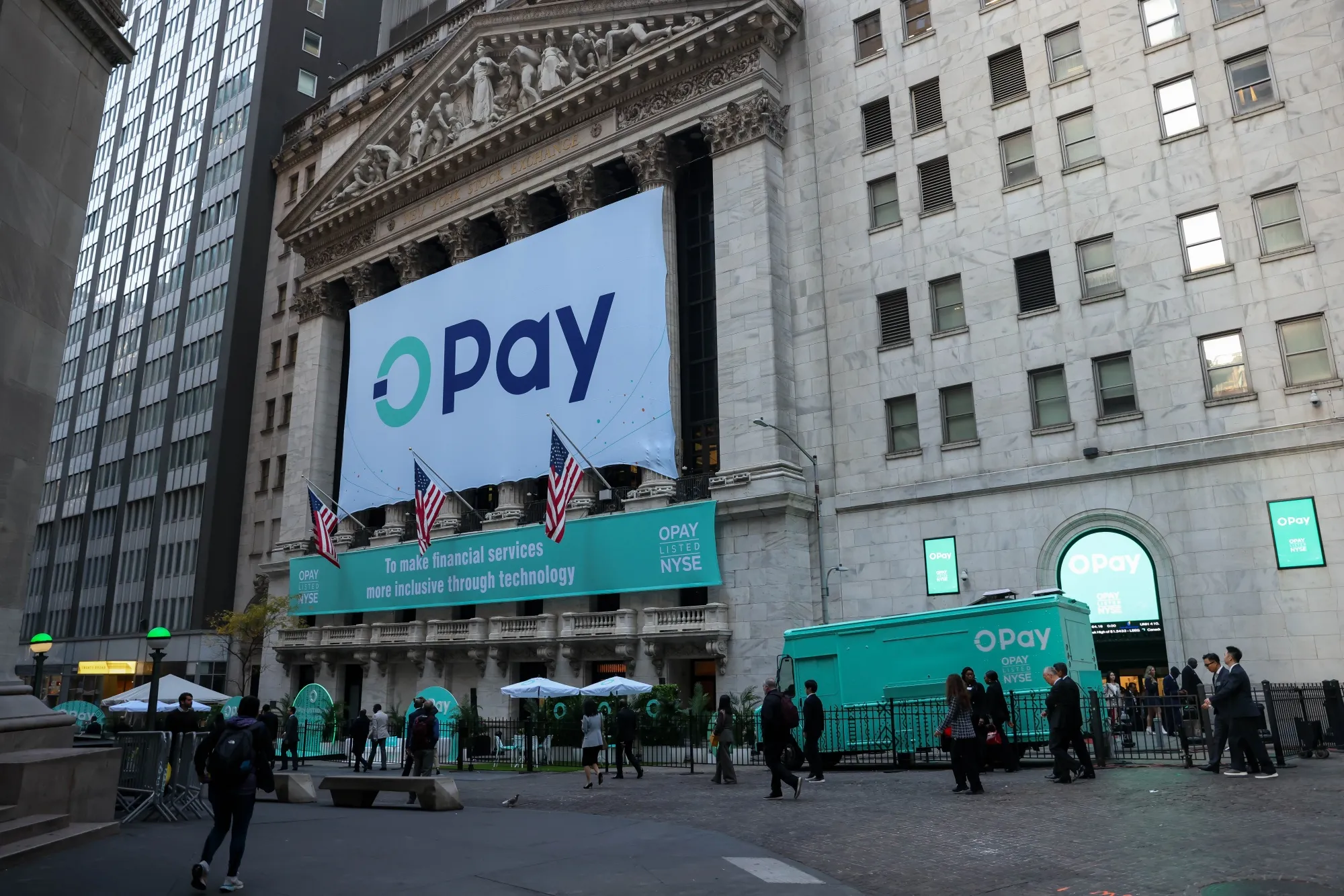
OPay had already set the price. Sixteen million American Depositary Shares at $19 each, a $304 million offering that would have valued the Nigeria focused payments company at roughly $4 billion on the New York Stock Exchange. Then came a regulatory inquiry from a jurisdiction OPay had described as immaterial to its operations, and on October 30, 2026, the listing was called off.
The decision to abandon the much anticipated initial public offering followed that inquiry, according to the company, which did not name the regulator involved or explain what the questions concerned. Bloomberg reported on Wednesday that a Chinese regulator’s inquiry led OPay to halt the process just hours after the pricing was fixed.
In an earlier statement, OPay said it was confident the matter would be resolved satisfactorily “in the near future.” The company offered no further detail on who was asking, or why.
The timing is what has drawn scrutiny. OPay’s prospectus, first published on October 9 and amended on October 23, stated plainly that the company did not expect to need approval from Chinese authorities before listing in New York. In the document, OPay said it was not required to obtain regulatory approval from the China Securities Regulatory Commission or to complete filing procedures under China’s 2023 overseas listing rules.
Its reasoning rested on where the business actually sits. “We are not required to obtain regulatory approval from the CSRC or go through the filing procedures under the CSRC Filing Rules before ADSs can be listed or offered in the United States because we did not generate any revenues within mainland China in 2025, being the most recent accounting year, and all of our operating assets are located outside of mainland China, our business activities are conducted outside mainland China, and our places of business are located outside mainland China, and our senior managers in charge of our business operation and management are predominantly non-PRC citizens or not domiciled in mainland China,” the prospectus read.
The rules Beijing introduced in 2023
China’s Trial Administrative Measures of Overseas Securities Offering and Listing by Domestic Companies were introduced in February 2023 and took effect on March 31 of that year. They require domestic companies pursuing overseas listings to complete filing procedures with the CSRC. The measures also reach certain companies incorporated offshore when their underlying businesses are substantially connected to mainland China.
OPay declined to comment when approached. Its ties to China run mainly through Zhou Yahui, its Chinese founder. The fintech is incorporated in the Cayman Islands and headquartered in Singapore, but Nigeria supplies the overwhelming share of its business. According to the prospectus, Nigeria accounted for 88.1% of revenue in 2025 and 89.5% in the first half of 2026.
Article 15 of the measures sets out when an offshore company falls inside their scope: at least 50% of its operating revenue, total profit, assets or net assets must come from mainland Chinese companies, alongside specified operational or management criteria. Regulators are directed to make that judgment on a “substance over form basis,” which allows them to look past an offshore corporate structure and examine where a company’s business is genuinely conducted.
OPay argued in its prospectus that it did not meet those conditions. It reported no revenue in mainland China in 2025, held no operating assets there, and said its business activities and management sit predominantly outside the country.
Even so, the company conceded that how the rules would be read and applied remained unsettled. “We cannot assure you that we are not, or will not be, subject to such filing requirements for this contemplated offering and listing in the United States and our securities offering in the future, in which case we may not be able to get clearance from the CSRC in a timely manner, or at all,” it warned.
For now, the $304 million offering is off the table and the $4 billion valuation exists only on paper. What remains unresolved is the question OPay’s own prospectus flagged as a risk: whether a company built outside mainland China, but founded and partly steered from within it, can still be drawn into Beijing’s listing regime. The inquiry that arrived hours after pricing suggests the answer may not be as clear cut as the filing first implied.



