
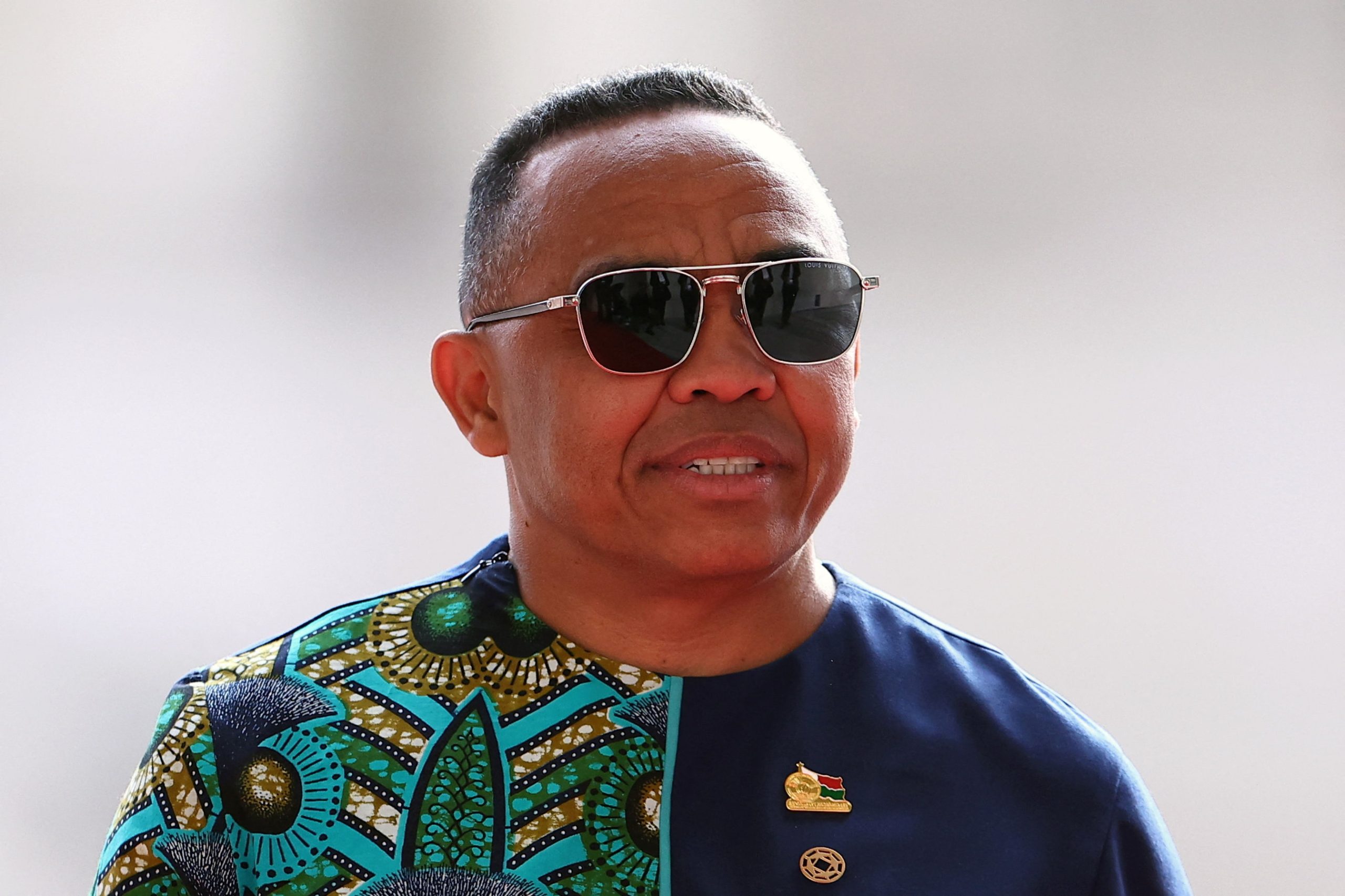
A year has passed since Colonel Michael Randrianirina took power in Madagascar, and the grievances that brought thousands of young protesters into the streets have not gone away. Water remains scarce, the lights still go out, and corruption continues largely unchecked. What has changed, according to an assessment of his first 12 months in office, is the machinery of control: legislation used to punish dissent, security forces shielded from scrutiny, and a corruption drive that appears to point in one political direction.
The demands that mobilised the Gen Z movement, from chronic shortages of water and electricity to deeply rooted corruption, remain unresolved a year into military rule, the assessment found.
In the way he has governed, Randrianirina has followed the template of his predecessor, Andry Rajoelina. He has moved quickly to use the law to concentrate power, to suppress dissent, to turn anticorruption efforts against political rivals, and to insulate his administration from any accounting for the killing and maiming of demonstrators or for corruption itself.
The law has also been deployed to narrow civic space. Freedom of association has been recast as criminal conspiracy, and the government has sought sweeping powers to monitor online activity in a bid to make criticism of its handling of public affairs harder to voice.
Beyond that, the authorities have paired the constitution with ageing public security statutes to claim wide powers of illegal search and to detain political opponents and critics at will, all presented as part of the fight against corruption.
Former officials and political figures from the previous administration, along with their relatives, have faced intimidation, unlawful searches, arbitrary detention and long periods of custody before trial, with dozens driven into exile. At least 20 people are still held for reasons that appear political, among them former presidential candidates Sylvain Rabetsaroana and Paul Rabary Andrianirina.
A corruption audit drawn with a cutoff
Randrianirina’s stated commitment to fighting corruption, one of the central demands of the Gen Z protesters, has been inconsistent. On taking office he ordered the Court of Accounts to audit the management of public funds, a step that was welcomed. The exercise, however, was confined to public finances between 2022 and 2025, a timeframe that shielded his own administration because he assumed power towards the end of that period.
The audits found that hundreds of millions of dollars in public money had been lost to corruption and mismanagement. Rather than open investigations, the administration appears to be deploying those findings against political opponents in an effort to control and silence them.
No reckoning for the crackdown
Impunity for public security officials has been another defining feature of the past year. Soldiers, police officers and gendarmes can be seen in extensive video footage opening fire on protesters and bystanders, killing and seriously wounding them during the Gen Z protests of September and October 2025.
No investigations have followed. In the absence of any meaningful inquiry, the message to public security officers is that they stand above the law, a signal that appears intended to keep the security apparatus loyal to the government.
Four senior officials of the gendarmerie and the army were elevated to the rank of head of state, despite the absence of constitutional grounds to justify the move, and key government positions have been filled with serving or former public security officers.
Constitutional values and the principles of good governance were likewise set aside in the appointment of ministers, including one who faces corruption allegations. In some cases, appointments rested on polygraph examinations rather than on institutional processes grounded in law that could guarantee accountability, integrity and transparency.
Budget priorities and personal protection
The salaries of these officials and of the wider state bureaucracy have absorbed the bulk of the 2026 national budget, at the expense of investment in the services whose failure brought the country onto the streets: water, electricity and health.
Health received just 6 percent of the national budget, the equivalent of about $5 per person for an entire year. That is less than the allocation under Rajoelina and roughly 50 times below international standards. Spending on Randrianirina’s personal security, by contrast, is estimated in the millions of dollars, and he and other senior officials have been provided with Russian security agents.
Activists in the crosshairs
Activists and other critical voices have been singled out. Gen Z campaigners have been accused of criminal conspiracy to assassinate the president simply for communicating with the opposition or for discussing the government’s failure to address public grievances.
At least nine Gen Z leaders were arrested arbitrarily in April for nothing more than membership of a WhatsApp group or for having exchanged messages with a political opponent or a whistleblower. Public security officers subjected some of them to acts that may amount to torture or other ill treatment, including revolvers forced down their throats.
Three of those arrested remain in custody before trial, among them Rakotoarijaona Mahery, held in deplorable conditions in one of the country’s most overcrowded prisons.
As a condition for their release, Randrianirina personally pressed the parents of detained activists to stop their children from taking part in protests. Such measures, aimed at punishing peaceful demonstrators and curtailing the right to peaceful assembly, are shrinking civic space further.
Critics of the government have also faced harassment and restrictions on travel abroad, particularly those who have tried to engage with regional and international bodies. Gabriella Ranjamalalasoa, the wife of one detained activist, was arbitrarily held by the Malagasy Police d’Enquêtes Spéciales at Ivato International Airport in Antananarivo, and her passport was confiscated to stop her boarding a flight to the 89th Ordinary Session of the African Commission of Human and People’s Rights.
The cybercrime bill
In August the government proposed a cybercrime law that would give it new authority to monitor every form of online activity while curbing media freedom. Under the measure, anyone criticising the government would have to support their opinions with actual and solid proof.
Yet the authorities have declined to pass a law guaranteeing the right to access information, which would both make such verification possible and allow for scrutiny and transparency. More troubling still, the cybercrime law would give the state permanent access to individuals’ telecommunications data without judicial oversight, in breach of the right to privacy.
Without clear pressure from regional and international actors, Madagascar risks sliding back into a familiar cycle in which authoritarian practices are used to silence dissent and entrench power, leaving the hopes that drove the Gen Z protests unfulfilled.



