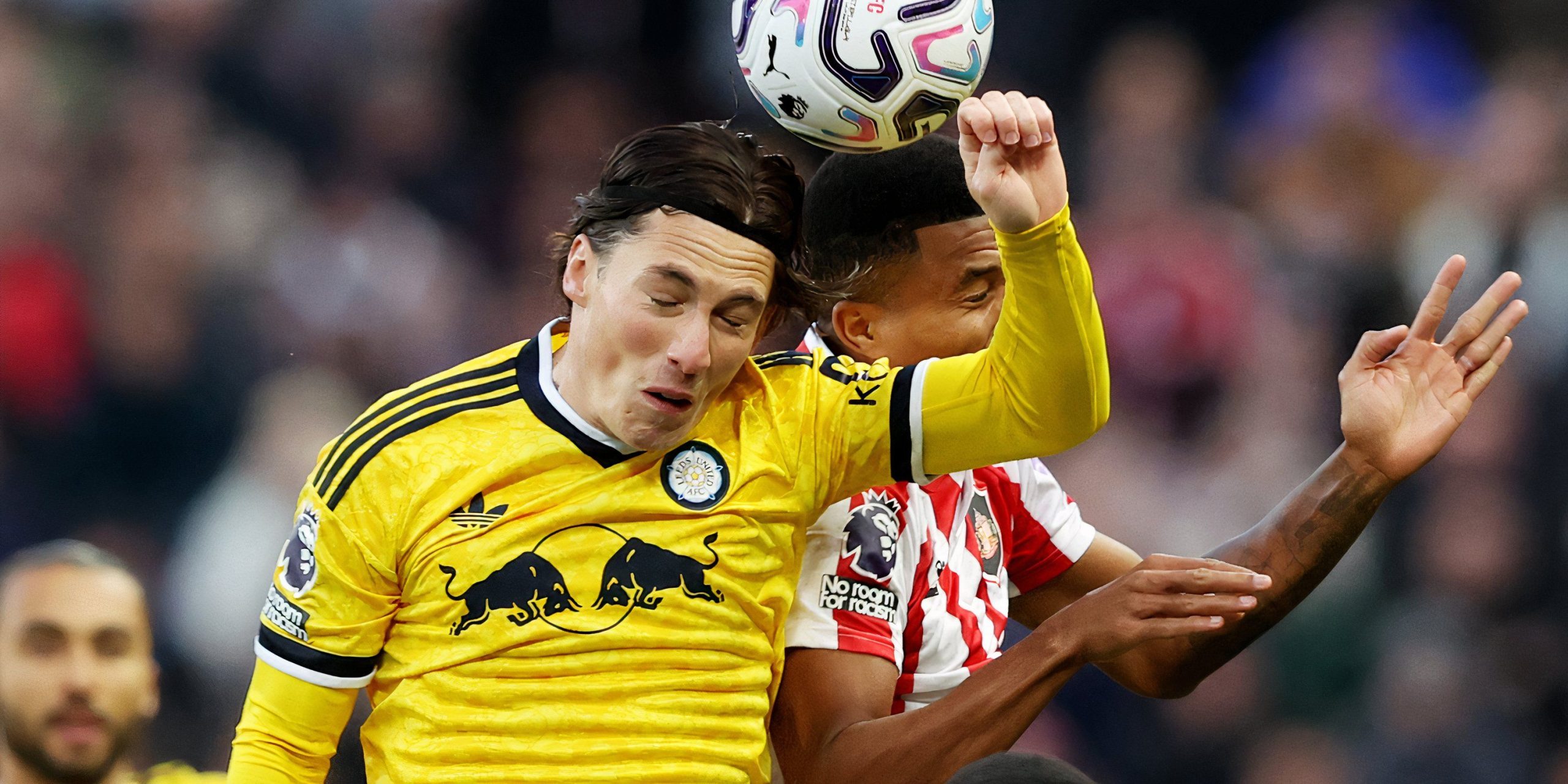
Leeds United’s attacking problems followed them to Wearside on Sunday, where Daniel Farke’s side were held to a 0-0 draw by Sunderland at the Stadium of Light, and the performance of Brenden Aaronson again raised awkward questions about the number ten role.
Seventh place after eight Premier League games is a strong return for a newly promoted side, but five of those eight fixtures have ended level, and Farke’s team have yet to find the extra gear that turns those stalemates into victories.
Outside of the 4-1 win over Newcastle United at Elland Road, Leeds have managed only five goals in seven league matches this season, a return that keeps the focus firmly on the attacking third.
Harry Wilson was handed a rare start for the trip north, only his second Premier League start of the campaign, and he was withdrawn in the 66th minute without completing a dribble or registering a shot, having lost five of his seven duels. To his credit, he did carve out a “big chance” for Tarik Muharemovic from a corner, though his contribution from open play was limited. Conditions did not help, with the ball spent long spells in the air, and it was not the kind of game for a player of Wilson’s profile. He did not do enough with the possession that came his way.
Yet Wilson was not the worst performer in a Leeds shirt. Brenden Aaronson, deployed alongside him in the number ten positions behind Dominic Calvert-Lewin, produced the least convincing display of the afternoon for the visitors.
The 26 year old United States international had not scored a goal or created a single chance, let alone a “big chance”, in his six Premier League appearances this season before Sunday. At the Stadium of Light he did register his first two chances of the league campaign, but he still failed to lay on any clear opening for a teammate.
His evening was also marked by a lack of physical presence. He lost possession ten times from 22 touches, won just one duel, and came out second best in 75% (3/4) of his physical contests.
The comparison with Wilson was unflattering. Aaronson created no “big chances” while the Welshman created one, he won half as many duels, and he made a quarter as many defensive contributions, with one to his name when he left the pitch.
For Leeds supporters, the display will not have come as a shock. Aaronson has now failed to score in each of his last 24 Premier League appearances for the club, a run stretching back to his two goal showing against Newcastle United in January, and he has provided only two assists across that period.
Set against the wider figure of a 64% duel loss rate in the top flight, his limited impact in the final third is even harder to overlook, and the Sunderland match added to a body of evidence that stretches back nine months.
Farke now has a decision to make about the number ten role, and on this evidence the argument for starting Aaronson again in the Premier League is difficult to sustain, whether he remains at Elland Road beyond January or moves on.