
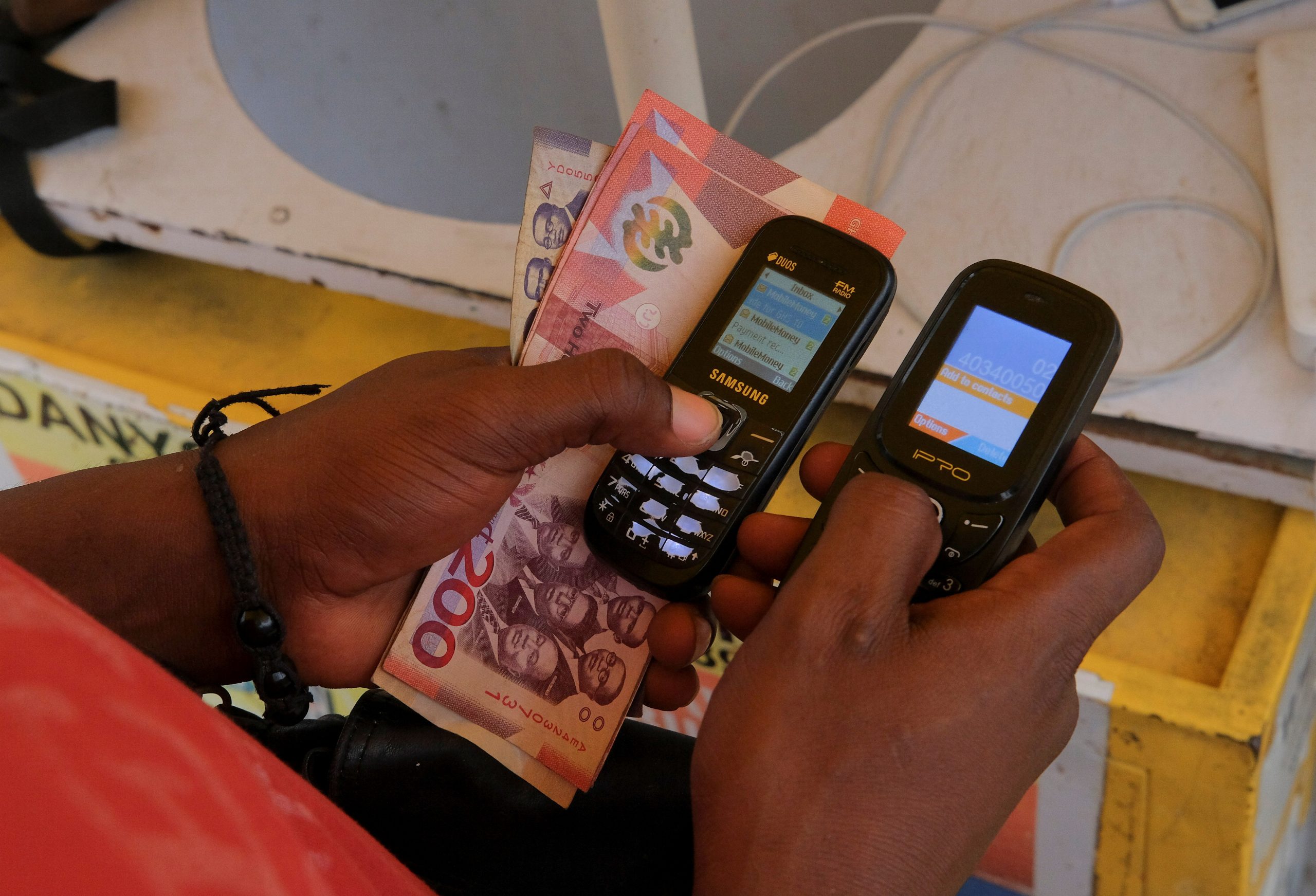
For weeks, Prince counted down to a payout he was certain would reset his life. When the day finally arrived, the Yepbit app refused to let him in, and the $1,000 his uncle had asked him to keep vanished with it.
Prince, 35, had handed over the money believing he could triple it inside 40 days. He never saw a cedi of it again. By his own account, his total losses climbed to $3,000, and the payout he had been waiting for was due in the very week the application became inaccessible.
The promise of rapid returns felt to him like a shortcut to financial independence in a country where secure, well paid work is hard to come by. His story raises an awkward question for Ghana and for much of the continent: when ordinary employment offers so little prospect of prosperity, how strong is the pull of getting rich online?
His name has been changed to protect his identity.
A borrowed $500 and a locked account
Mary, 32, a mother of two, understands the cost of that pull. A friend told her she had been investing successfully with BonChat for six months, and Mary was persuaded. She borrowed $500 from a fellow church member and signed up.
Within a few weeks, her account showed $2,500. She planned to withdraw the money after 40 days. Then the platform stopped working.
The episode left her depressed. She is now in therapy and still owes the money she borrowed. “Please don’t borrow money because somebody promises to multiply it,” she told The Africa Report. “I believed someone I trusted. Now I cannot even repay the person who helped me.”
An economy that leaves young people behind
Both cases sit against a difficult labour market. Data from the Ghana Statistical Service shows unemployment averaged 12.8% across the first three quarters of 2025. For people aged 15 to 35, the average was 21.9%, and close to two million young people were neither employed nor in education or training by the third quarter.
The problem reaches beyond outright joblessness. Ghana’s composite labour underutilisation rate stood at 23.4% in the third quarter of 2025, a measure that captures the wider group of people whose availability for work, or wish for more hours, was not being absorbed by the economy.
Even those in work often find little security. The national daily minimum wage is GHS21.77 ($1.87) in 2026, after a 9% adjustment. For a generation facing unemployment, precarious work and few chances to earn, the offer of multiplying savings within weeks can look unusually attractive.
Digital platforms sell something regular jobs rarely do: the prospect, however far fetched, of instant financial transformation.
Hundreds of fraud cases reported
Ghana’s Cyber Security Authority recorded 352 online investment fraud cases involving GHS3.43m in reported losses during the first six months of 2026. The authority says the criminals advertise on social media, gather funds through mobile money, and in some cases present themselves as foreign companies or cryptocurrency ventures.
“Everybody wants to improve their lives, and criminals exploit that desire,” said Abubakar Sadiq Adams, a member of Ghana’s Cybersecurity Experts Association.
The deception has grown more polished. WhatsApp and Telegram groups carry testimonials, screenshots that appear to show earnings, and offers to earn by recruiting others. Friends become informal recruiters, while social media personalities can lend a doubtful platform an air of respectability.
Ghana has passed the Virtual Asset Service Providers Act, 2025, and regulators are working towards full operationalisation by 2027. But the problem is not confined to Ghana.
In Nigeria, the collapse of the cryptocurrency linked platform CBEX in 2025 left investors unable to withdraw their funds, and the country’s SEC later warned against unregistered schemes spreading through WhatsApp, Telegram and other services. In Côte d’Ivoire, authorities recorded CFA6.9bn ($11.7m) in losses from a broader set of cybercrime cases in 2024, a figure that hints at the scale of digital fraud across the region.
For regulators, the difficulty lies in catching a scheme before anonymous operators disappear. For governments, the harder task is widening access to credible economic opportunity.
Regulator names 23 entities
Ghana’s Securities and Exchange Commission issued a notice on 15 July identifying Yepbit Exchange and BonChat as suspected fraudulent investment schemes. Neither was licensed by the regulator. A week later, the SEC named 23 entities offering unlicensed investment products online.
They were AfriHub, BG Wealth, BP Investment, Creative Walker Promotion Company (CWPC), Dallmayr, Expert (Expect) Option, GAIP Securities Learning & Exchange Group, Ghana Vest, Harvest Fund, Infarms/Secure Farm, Kukafor Platform, Mazzuma, Medisyne Trade, NIO Platform, Profit Rise Invest, QuantVest Stock Exchange (QVSE), QVES, QX Broker/Qumatix, Smart Gain, Yepbit Trading, ZEC ZEC FX, BonChat and Ultima Cryptocurrency Group.
Lack of a licence does not on its own prove that every named entity committed fraud. The regulator has, however, warned investors away from their products and says it is working with law enforcement agencies.
Mensah Thompson, the SEC’s deputy director general for operations, said fraudulent operators increasingly lean on trusted individuals to promote their schemes. Some platforms, he explained, also require referrals before participants can collect supposed earnings, which keeps recruitment going and sustains the appearance of profitability.
“We keep warning people against such schemes. We are collaborating with the Cyber Security Authority to clamp down on the schemes,” Thompson told The Africa Report.
Behind the warnings and the enforcement notices are individuals such as Prince and Mary, whose losses will take far longer to recover than the 40 days they were promised. Regulators can name platforms and pursue operators, but closing the gap that makes such offers appealing in the first place remains the more difficult assignment.



