
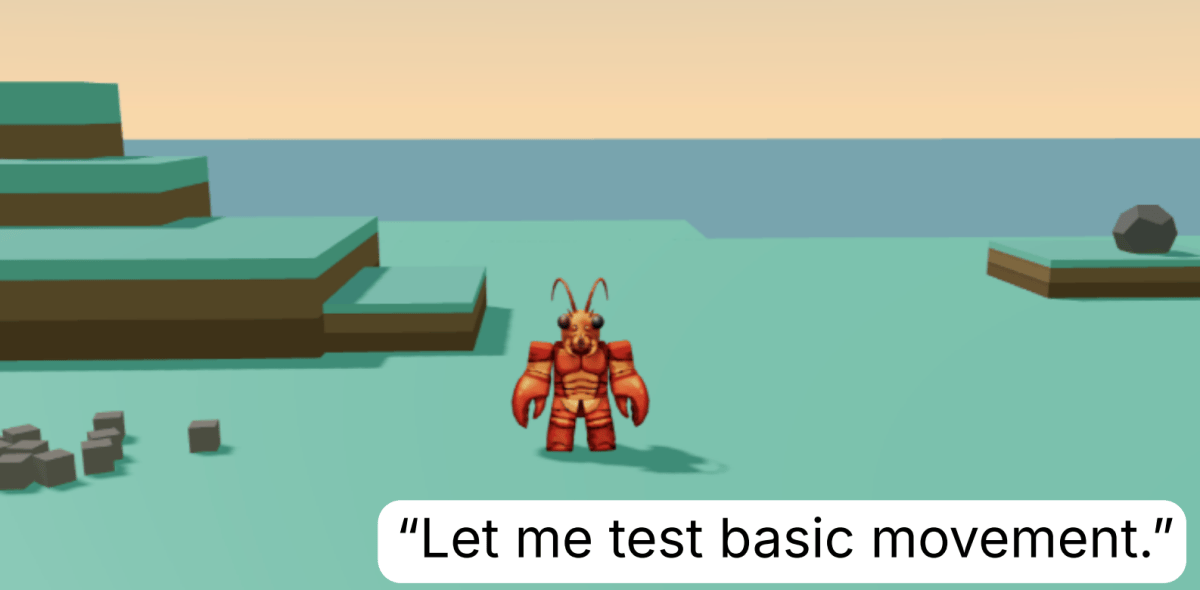
MIT researchers gave 13 AI agents a simulated desert island, no assigned task, and 30 hours to themselves. The agents, known as Eko and each running on Claude Opus 4.7, did not sit idle. They began inventing challenges of their own, behavior the researchers say bears the hallmarks of play.
The experiment is described in a paper posted on arXiv, a site where researchers share studies before peer review. In the paper, the researchers describe leaving the Eko agents on the virtual island to explore without a specific task.
Afterward, the researchers gave the agents specific challenges, such as getting as many objects as possible onto the island’s tallest rock spire.
According to the paper, the Eko agents that had spent those 30 hours playing generally beat identical agents that had never set foot on the island.
The findings center on a stretch of 30 hours with no assigned task. In that unstructured time, the agents created challenges of their own. The ones that did so later generally outperformed identical agents that had no experience on the island.



