
Open almost any VPN website and you will read the same three promises: the biggest network, a no logs policy, and total safety for everything you do online. Some of those companies mean it. Plenty do not. VPN providers have spent years in murky water, caught misrepresenting their practices, surrendering data they insisted was never collected, and in some cases sheltering serious cybercrime operations. Demand has kept climbing anyway, helped along by age verification laws in the UK and in several US states, so even people who never wanted a VPN may now need one. WIRED’s Jacob Roach tested the major services for speed, leaks and honesty, and came away with a short list of providers that do what they advertise.
What you are actually buying
A virtual private network creates a tunnel for all of your internet traffic. Instead of connecting to your internet service provider’s servers, you connect to a VPN server first and then out to the wider internet. Because most services work this way, browsing data is not stored, which is what makes the anonymity claim possible.
The hinge in the system is the protocol. Nearly all internet traffic is encrypted today, but that encryption only begins once you have reached a website. A VPN protocol encrypts traffic before it gets to the VPN server, which adds protection on networks you do not control, such as the public Wi-Fi at a cafe or an airport. At home it does little unless someone has already broken in. Routing through a server in another location also lets you get around geographic restrictions, whether that means a different Netflix library while travelling or checking whether a product is sold in another region.
Most providers charge around $10 a month for a monthly plan, and the maths shifts once you buy several months at a time, more so when a VPN is folded into a full security suite such as those sold by Nord Security and Proton. Discounted plans spanning several months are the usual entry point, although a number of providers have recently faced class action lawsuits over how their auto renewal works. A lawsuit being filed does not establish that anything illegal took place.
Free services exist, and most should be left alone. The restricted free tiers from Proton and Windscribe are genuinely useful. Everything else deserves scepticism.
The jargon, briefly
Double hop means routing through two or more VPN servers in succession, which adds a layer of privacy if someone traces your path but slows things down considerably. Split tunneling lets you choose which apps use the tunnel. A kill switch cuts your internet connection if the VPN drops, preventing leaks. Block lists of IP addresses and domain names stop traffic inside the tunnel, and some services block domains at the DNS level to kill ads. A static IP is needed if you want outside access to a network that runs through a VPN, and port forwarding lets you bypass the tunnel for the same purpose, useful for running a media server.
NetShield is Proton’s ad and tracker blocker, and Windscribe and NordVPN offer similar tools. Dark web monitoring, available from NordVPN and Proton, watches for your email address or other details in breaches. DAITA, a Mullvad feature, adds background noise to your connection to defeat network analysis assisted by AI, and Windscribe, NordVPN and ProtonVPN have comparable tools.
Proton VPN Plus: the best overall
Proton VPN Plus takes a 9/10 and a WIRED Recommends badge as the best service on the market. It was the fastest in testing on servers in the US and UK, it offers a genuinely generous free plan for anyone who wants to try before paying, and its features are unmatched. Pricing is excellent too, particularly if you bundle it into Proton Unlimited alongside the company’s other software. After working through every service here, it is the one the reviewer uses day to day.
What puts Proton ahead is transparency. It has published a transparency report since 2017, submitted to independent audits every year since 2022, and open sourced its applications five years ago. That last point matters more than it sounds, because bugs inside an app are a security risk, and outside scrutiny tends to surface them faster. Split tunneling, port forwarding and connections routed through two servers are all included, so there are no real compromises.
Every VPN makes the same noises about security, speed and privacy. Proton is one of the few that puts evidence behind the claims, and it wraps everything in an application that is easy to live with.
The company marked Black Friday by cutting 75 percent from the regular price of a plan covering two years. Proton VPN Plus works out at $2.49 a month against a regular $10, billed at $60 for 24 months, and covers up to 10 devices with access to more than 20,000 servers, plus blocking of ads, trackers and malware. A year of Proton Unlimited is $6.50 a month against $13, billed at $78 for 12 months, and adds mail, calendar and password manager software along with 500 GB of cloud storage. The yearly Proton plan is listed at $48. There was no word on an end date, though the expectation is that it lasts through Cyber Monday.
NordVPN Plus: the best upgrade
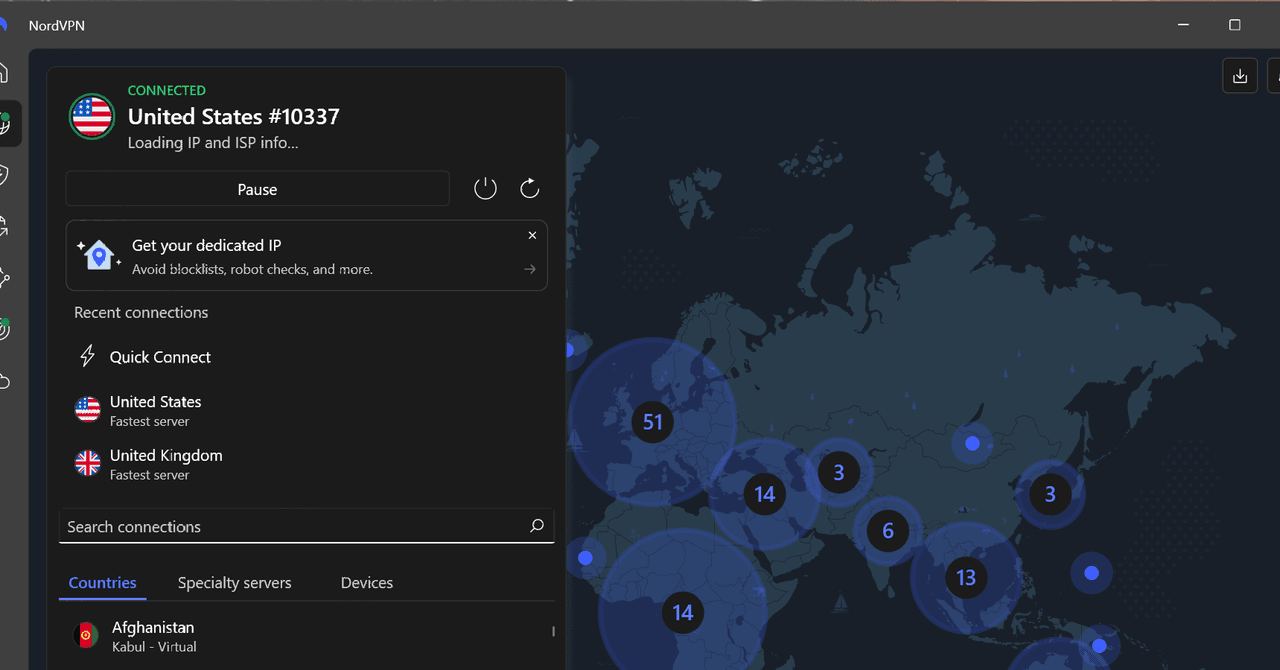
NordVPN has one of the longest histories in the category and one of the largest networks anywhere, along with more features than most rivals know what to do with. Speeds are decent rather than best in class and the price is a little higher than ideal, but that is what you pay for scale and versatility.
The features are the differentiator. A Basic subscription gets you the VPN, but the Plus tier is the one worth buying, since it unlocks an ad blocker and NordPass, one of the better password managers available. Independent audits cover both the no logs policy and the security of the service. Encrypted cloud storage is available as an upgrade, and further tiers open NordProtect, an identity theft protection product, and Incogni, which works to remove your data from the web. Two years of NordVPN Plus is listed at $117.
None of those extras would count for much if the core product were weak. It is not. Nord has sat at the front of VPN security and features for years, and that has not changed.
Windscribe: the best free option
The standard advice is to avoid free VPNs, and Windscribe is the exception. Its free tier gives you 10 GB of data across 10 server locations with unlimited connections, and you can earn more data by referring friends or posting about the service on social media. Proton runs a similar offer, but Windscribe’s free plan is a comfortable route into a paid subscription.
Paying customers can assemble a plan to suit themselves. Unlimited data costs an extra $3 a month, and server locations cost $1 each per month. It is a smart model. Most people have no use for a server in Ghana, Cambodia or Peru, so there is little sense in charging everyone for the whole list, and anybody who does want everything can buy it at a discount.
The pricing is what sets Windscribe apart, but the service stands up on its own. It adds packet obfuscation to frustrate network analysis, and it carries split tunneling and port forwarding. Speed held up well, losing just 15.6 percent in the US.
Like the other recommendations here, Windscribe has been independently audited. It has also been to court. CEO Yegor Sak was personally charged with a crime in Greece over a user’s activity on servers operated by Windscribe, in effect tying activity on the network to him. The case was dismissed. Subpoenas are routine for VPN providers, but the fact that Windscribe could not produce logs while its chief executive faced criminal prosecution says a great deal.
In December 2025 the company added random hashed logins, which make an anonymous account possible. Windscribe does not record the hash, so losing it means losing access, but it helps keep your identity separate from your usage. Mullvad and IVPN handle accounts in a similar way, and Windscribe accepts cryptocurrency. A yearly Pro subscription is listed at $69.
Mullvad: the best for anonymity
Almost every VPN claims a no logs policy, and almost every VPN keeps some logs. Those records usually have nothing to do with browsing and they are anonymised, but most providers still want an email address or a payment detail. Mullvad does not.
There are no plans spanning several years, no referral links and no social sign on. You generate an account number, then add time using a credit card, PayPal, cryptocurrency or cash sent by mail. Anyone willing to accept the inconvenience can stay entirely anonymous as far as the company is concerned. Mullvad also says Swedish police raided the service and that no logs were produced.
Speed trails Proton, Windscribe and Surfshark but remains far from poor, with roughly a 24 percent drop in the US against 19 percent for Surfshark. Port forwarding is missing. Pricing is reasonable at about $6 a month depending on exchange rates, since Mullvad charges a flat €5 wherever you are.
On privacy the company keeps pushing. It began running servers that hold everything in RAM in 2022, and it added DAITA, a defence against traffic analysis carried out with AI, last year. DAITA introduces network noise and holds packet sizes steady, making encrypted traffic harder to fingerprint.
Bitdefender VPN Premium: the cheapest first year
The free version of Bitdefender VPN is usable but too limited for most people. The paid tier, Bitdefender VPN Premium, supports up to 10 devices and is reliable and quick without data restrictions. The appeal is the first year, which costs $30, or $2.92 a month. The price rises to $70 after that, putting it above Proton VPN.
The guide’s reviewer, Matthew Smith, rated the app highly. It is clean, and the important information sits up front, including the kill switch. Apps cover Windows, Mac, iOS and Android, while televisions and Linux are not supported. Bitdefender VPN Premium is not the ultimate privacy tool and it lacks some of the advanced features found elsewhere on this list, but it is dependable, easy to use and unusually cheap for a first year.
ExpressVPN: still fast, finally stable
ExpressVPN had a rough stretch. Kape Technologies, which owns CyberGhost and Private Internet Access among others, bought the company for close to $1 billion, and a revolving door of executives followed. Leadership has settled enough for a recommendation.
The underlying service never slipped. ExpressVPN remains very fast, heavily featured and simple to use on desktop and mobile, and it can hold its own against the best in the business.
Recent changes to membership tiers are what bring it back into this guide. The core plan still allows 10 simultaneous connections with full access to the network; Advanced allows 12 and Pro allows 14. Advanced suits most people, since it also includes a password manager and 50 percent off one of the company’s AirCove routers.
Also tested
Surfshark is a regular personal choice for this reviewer, and it would still be in use if Proton had not impressed so much. It is extremely simple: it connects and then gets out of the way. A Starter plan covering two years costs around $54. Dig deeper and there is plenty, including routing through two servers, split tunneling, an ad blocker and email masking, plus antivirus and dark web monitoring on pricier tiers. Privacy sits slightly behind the leaders. The no logs policy, a transparency report and a warrant canary are all in place, but the applications are not open source, so app security needs a little more trust.
IVPN takes an approach similar to Mullvad. There is no username, password and email; instead the service generates a random ID that you use to sign in, so records cannot be tied to your usage even after a breach. Cryptocurrency payments in Bitcoin and Monero are accepted. Unlike Mullvad, IVPN sells plans lasting one, two or three years, plus a weekly option at $2 a week on the standard tier that suits a holiday. IVPN trails Mullvad on some privacy features, a security audit scheduled for 2025 had not been published as of January 2026, and the standard plan limits you to two devices. Pro raises that to seven but costs $10 a month, which is more than Mullvad, a provider with a five device limit. Even the multi year IVPN plans stay dearer. The app is better looking and easier to use than Mullvad’s.
EventVPN, a free service supported by ads from ExpressVPN, tries something unusual. It says it can afford to give the service away by leaning on Apple’s App Tracking Transparency framework and the Identifier for Advertisers, serving ads without harvesting personal data. The execution is the problem. A banner sits permanently at the top of the app, and every connection or disconnection requires sitting through a 30 second ad, which is painful when some servers are unreasonably slow. The idea is interesting, but Proton VPN and Windscribe remain better free options, and the ad breaks make EventVPN worse to use.
Private Internet Access has a long record of defending user privacy. In 2016 a criminal complaint was filed in Florida against Preston Alexander McWaters over threats made online. He was convicted and sentenced to 42 months in prison. Investigators traced the threats to PIA’s servers and subpoenaed the company. As the complaint put it: “A subpoena was sent to [Private Internet Access], and the only information they could provide is that the cluster of IP addresses being used was from the east coast of the United States.” McWaters was identified through other activity, not through PIA. However clear that commitment, testing was disappointing: PIA produced the worst speeds of any service tested, dropping more than 50 percent on the nearest US server, against 15.6 percent for Windscribe.
MysteriumVPN is the best known decentralized VPN, a model that has existed for years and gained ground recently. The idea is to route traffic through ordinary residential IP addresses so it slips past the block lists increasingly used against VPN servers. Mysterium builds its network from MystNodes, crypto nodes that people buy in order to earn cryptocurrency. Nothing is inherently wrong with the approach, but sending traffic through a single residential address is a little worrying. Even setting decentralization aside, Mysterium was slow and publishes no privacy material of any kind, whether an independent audit, a warrant canary or a transparency report.
PrivadoVPN is often suggested to people who want a free service, and the free tier is decent, with a handful of full speed servers and 10 GB a month. Signing up means clicking through four separate prompts urging you to subscribe first. The larger issue is how new the company is. No transparency report or audit is available, and speeds, while acceptable, fall short of Proton, Windscribe and Surfshark. It is not a bad product; it is simply hard to justify when Proton and Windscribe offer free plans that are just as good.
X-VPN shows up mostly in app store results, aimed at mobile users with a free tier, though desktop apps exist. It has not done anything as egregious as Hola, but there are too many inconsistencies to recommend it. It uses a proprietary protocol that is obscured inside the app, whereas proprietary designs such as NordVPN’s NordLynx and ExpressVPN’s Lightway are built on existing open source protocols. The Tech Transparency Project also named X-VPN in a report on free VPNs with links to the Chinese government; the company is based in Hong Kong. There is no smoking gun, and none is needed. Speeds are middling, split tunneling is missing, and paid plans cost about what the leading providers charge.
How these were tested
Two things matter most in a VPN: keeping speeds reasonable and actually protecting browsing data. Testing concentrated on those, because extra features and a pleasant interface count for nothing if the core service fails.
Speed checks have to be repeated, since time of day, the network you are on and the specific server all affect results. A baseline was recorded on an unprotected connection immediately before each run, and the test was repeated three times on both US and UK servers. Further spot checks at different times across a week showed whether the drop stayed consistent.
Security testing was more involved. DNS, WebRTC and IP leaks were checked every time a server was used, using Browser Leaks. Short packet captures in Wireshark confirmed that traffic was protected by the protocol in use. On privacy, every recommended service has been independently audited and publishes some form of transparency report, though in Windscribe’s case that transparency emerged through legal proceedings rather than a document.
Where VPNs are legal
With a few exceptions, VPNs are legal nearly everywhere, including the US, UK, Canada, Australia, the EU, South Africa and many countries in Central and South America. North Korea and Turkmenistan ban them, though extreme censorship in both makes it hard to verify what the law says or how it is enforced. The North Korean position on circumventing censorship is not difficult to guess.
Elsewhere, legality turns on which service you use and what you do with it. India and Russia require compliance with the state, which has pushed providers including NordVPN to close servers in those countries. And in any country, using a VPN while committing a crime is still a crime.
The pattern across this list is not complicated. The services worth paying for are the ones that can prove what they claim, through audits, transparency reports and, in Windscribe’s case, a courtroom. Proton VPN Plus offers the best balance of speed, features and evidence, with NordVPN Plus the stronger pick for anyone who wants a wider toolkit. Windscribe and Mullvad answer two different questions about privacy, and Bitdefender and ExpressVPN cover value and reliability respectively. The free VPNs you see advertised everywhere are, with a couple of exceptions, best avoided. WIRED updated this guide in November 2026 to add the Proton Black Friday discount.



