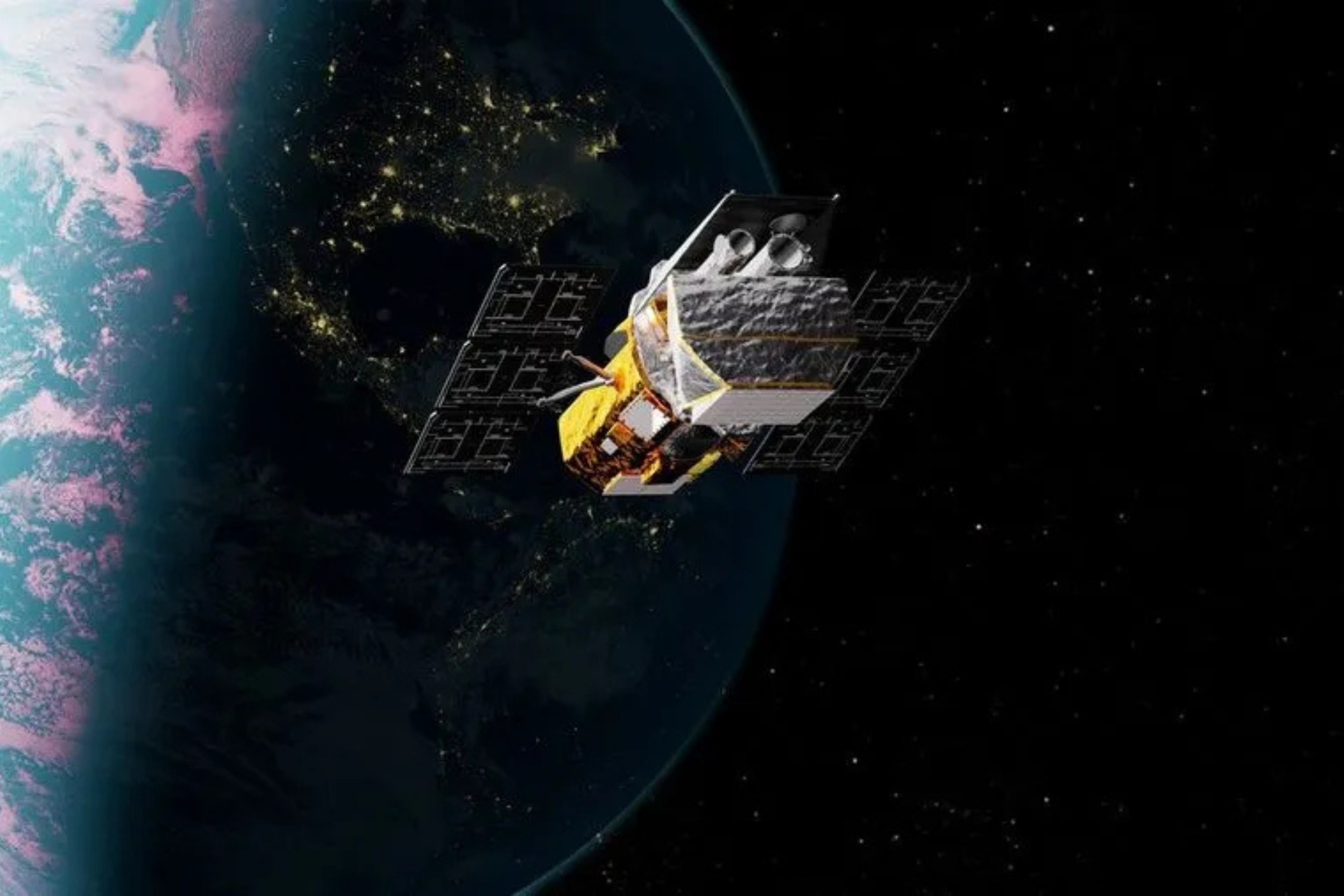
NASA’s Swift Observatory is on its final descent. Almost 22 years after it left the ground, the aging space telescope is expected to fall back into Earth’s atmosphere on Wednesday, after efforts to lift it into a higher, safer orbit came up short.
According to NASA, the observatory should re-enter at roughly 3:30AM ET, with a window of about 11 hours on either side of that estimate. Most of the spacecraft is expected to burn up on the way down, though some components will likely survive the passage through the atmosphere.
The figures involved are modest by launch standards but considerable for a piece of falling hardware. Swift weighs around 3,200 pounds and measures 5.6 meters (18.4 feet) tall, with a width of 5.4 meters (17.7 feet) that mostly comes from its deployable solar arrays.
The odds of anyone being hurt are slim
NASA puts the risk of injury from surviving debris at a very low level, and the telescope’s orbit limits where the fragments can come down:
“Re-entry locations of any surviving components can vary from hemisphere to hemisphere and depend on when it re-enters. Due to Swift’s low inclination, re-entry locations of surviving fragments are limited between 20.6 degrees south latitude and 20.6 degrees north latitude. The risk of harm coming to anyone on Earth is unlikely — approximately 1 in 2,100. NASA and Space Force will continue to monitor the re-entry and update predictions.”
The agency stopped trying to save the telescope earlier this year. A spacecraft named Link was meant to push Swift into a higher orbit, but the effort ran into technical trouble with attitude control, and the plan was given up.
Even so, Swift delivered far more than its designers had bargained for. Its prime mission was scheduled to run for two years, with the aim of tracing the origins of gamma-ray bursts. Instead, it carried on as a general purpose observatory working across multiple wavelengths, until solar storms pulled it down into a lower orbit.
Anyone wanting to track the telescope’s last hours can follow updates on NASA’s blog, which the agency is using to post revised predictions as the re-entry approaches.
For a mission built to last two years, two decades of service is an unusually long return, and its ending will be a quiet one: a brief streak of light, most likely over open ocean or empty ground, far from anyone who might notice.