When Governor Ahmadu Umaru Fintiri toured Optimum Laboratories in Yola, the visit drew attention to more than the equipment inside the building. It highlighted a private diagnostic center that says it has grown since 2004 into a platform offering molecular diagnostics, microbiology, hematology, biochemistry, immunology, serology, medical imaging, outpatient services and research support. The larger question is whether that kind of investment can make advanced testing more accessible and trusted in Adamawa.
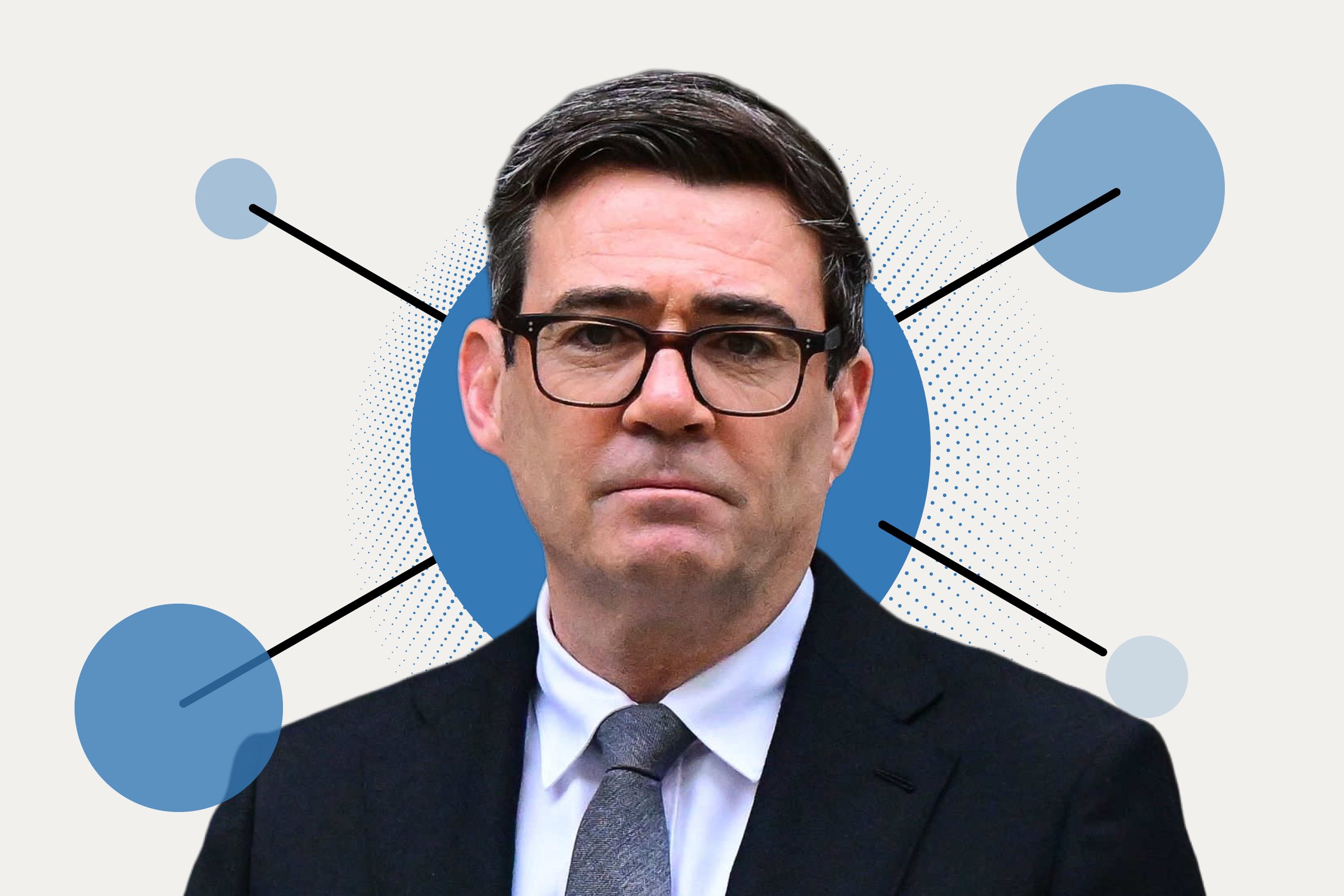
Fintiri commended the laboratory’s Chief Executive Officer and Scientist Mohammed Sani Umar for investing in Adamawa’s healthcare sector and for building a diagnostic facility capable of providing services that residents might otherwise seek elsewhere. The governor’s message was direct: he saw an entrepreneur who could have taken his expertise and investment somewhere else but chose to build in Adamawa. Observers of the laboratory’s role in the state have also noted the significance of the development.
Optimum is not simply another private laboratory in Yola. Its publicly documented services now span molecular diagnostics, microbiology, hematology, biochemistry, immunology, serology, medical imaging, outpatient services and research support. The laboratory says it was founded in 2004 and has developed into a diagnostic center serving Adamawa and the wider region.
That evolution matters because healthcare challenges in the state are not limited to the availability of doctors or hospital buildings. Sometimes the problem begins much earlier: knowing what is wrong with the patient. A doctor can prescribe the wrong medicine if the diagnosis is wrong. A hospital can have doctors and nurses but still struggle to provide effective treatment if laboratory confirmation is unavailable, delayed or unreliable.
Why diagnostics matter
Diagnostics sit quietly at the center of modern healthcare. Blood chemistry, microbiology, hematology, molecular testing and imaging may not attract the same public attention as a new hospital building, but they determine what clinicians know. Optimum’s service information says the laboratory provides more than 100 diagnostic tests and uses modern equipment across molecular diagnostics, biochemistry, immunology, serology, microbiology, hematology and medical imaging. Accessible testing matters because diagnostic ignorance can carry life altering consequences, as the case for knowing one’s genotype shows.
The question is no longer whether Adamawa has laboratories. The more important question is whether patients can obtain increasingly sophisticated diagnostic services within the state, with reliable turnaround times and quality systems that clinicians can trust. Optimum is positioning itself in that space.
Its stated quality system includes registration with the Adamawa State Ministry of Health, the Corporate Affairs Commission and the Medical Laboratory Science Council of Nigeria. Its website also lists National Health Insurance Authority compliance. The laboratory says it has implemented a laboratory quality management system and trains staff in areas including tuberculosis and malaria diagnosis.
That is a different proposition from simply owning laboratory machines. A functioning diagnostic system requires trained personnel, quality control, standard procedures, maintenance and the ability to turn a specimen into dependable information. That is where the real investment lies.
Fintiri’s comments about Umar’s journey added a personal dimension. The governor described him as someone who came to Adamawa as a National Youth Service Corps member, the one year national service scheme for graduates, and eventually built a substantial healthcare enterprise in the state.
Umar’s own explanation is equally revealing. He said Adamawa became home after he married an Adamawa woman and had four children. “Adamawa is now my home,” he said, explaining that the laboratory represented part of his contribution to a state that had given him opportunities to grow.
There is an important development lesson inside that statement. Investment is not always attracted by tax incentives, industrial parks or government contracts. Sometimes people invest where they have formed a relationship with a place. They build where they feel they belong. That is what makes Umar’s story different from the usual narrative of private investment.
Optimum’s history, according to its own account, stretches back to 2004. Over that period, the organization says it has moved from its beginnings in Yola towards a wider diagnostic platform with advanced laboratory technology, research services and outpatient care. The recent expansion therefore looks less like a sudden project and more like the latest stage of a long experiment: can a private healthcare company build sophisticated diagnostic capacity in a state outside Nigeria’s traditional medical centers?
TB pilot and a wider platform
Its innovation is not limited to having modern equipment. The laboratory has recently been involved in a pilot using the Pluslife Mini-DOC for tuberculosis diagnosis, with Stop TB Partners through the Janna Health Foundation engaging the facility around the implementation. The work focuses on faster and more accessible TB diagnosis, according to the laboratory’s recent public update.
That is important because tuberculosis is not simply a laboratory problem. A health deal between the United States and Nigeria worth nearly $2 billion specifically allocated funds for HIV, TB and malaria programs, underscoring how seriously global health partners view diagnostic gaps in Nigeria. Delayed diagnosis means delayed treatment. Delayed treatment means continued transmission. In communities where patients struggle to reach specialized services, the location and speed of diagnosis can affect the entire chain of care.
Optimum also lists research support among its services. The company says it supports clinical, laboratory and public health research, including molecular and microbiological testing, academic research and validation of diagnostic methods. This is where the facility begins to look less like a conventional diagnostic center and more like a potential healthcare platform. It can collaborate with public health programs. It can potentially become part of the training ecosystem for the next generation of health professionals.
That last possibility became clearer during the recent commissioning. The Adamawa State Government has backed a proposed partnership between Optimum Laboratories and Adamawa State University, Mubi. The partnership is expected to create opportunities around medical training, research and diagnostic services as the university expands its medical education programs.
This may eventually become one of the most consequential parts of the entire investment. A research partnership can connect healthcare delivery, education and research, creating the possibility of a cycle in which they reinforce one another. For Adamawa, that matters because building healthcare infrastructure without building human capital can leave expensive machines underused. Training health professionals without adequate facilities limits practical learning. The partnership, if properly structured and implemented, could begin to close that gap.
But optimism must meet scrutiny. A partnership announcement is not the same thing as a functioning academic program. The real test will be whether students gain meaningful practical exposure, whether research projects emerge, whether diagnostic standards are maintained and whether patients ultimately experience better care.
For years, one of the frustrations of healthcare in many northern states has been the need to travel for specialized services. The healthcare deficit drives a costly exodus. Malnutrition admissions in North-East Nigeria rose 18 percent in a year, a figure that reflects how untreated or poorly managed illness compounds existing vulnerabilities. Families do not only spend money on treatment. They sometimes move sick relatives across state lines simply because the diagnostic or specialist service they need is unavailable locally.
The Gazette News has previously examined the broader pressure on Adamawa’s health system, including the burden of out of pocket healthcare spending and gaps in frontline services. That context makes private diagnostic investment more important. Optimum cannot solve Adamawa’s healthcare problems alone. But a strong diagnostic sector can remove one important reason people leave the state. It can also help existing hospitals work better by providing clinicians with timely information.
This is why the governor’s visit should not be reduced to another government inspection. It provides an opportunity to ask a much bigger question: what happens when local entrepreneurs begin building parts of the healthcare system that government alone cannot finance or operate?
Private investment does not remove the government’s responsibility. The state still has to regulate. It has to enforce professional standards. It must ensure that healthcare providers meet the required quality and safety benchmarks. It must also create an environment in which serious investors can operate without compromising public interest. Adamawa’s approved ₦609.1 billion 2027 budget proposal sets out where public resources are heading, and the government’s stance on private healthcare investment will determine how effectively that spending translates to better health outcomes.
Fintiri’s visit therefore sends two messages at once. The government cannot build every laboratory, hospital, research center and diagnostic facility itself. But it can create conditions in which credible private investment becomes part of the public health architecture. That is potentially where the Optimum story becomes bigger than Optimum.
From The Gazette News’ perspective, Optimum Laboratories represents one of the more interesting examples of homegrown healthcare entrepreneurship in Adamawa. That assessment is not based simply on the governor’s praise. It is based on what the organization says it has built and the services it publicly documents. A company that began in 2004 has expanded into molecular diagnostics, medical imaging, research support, outpatient care and a wider laboratory service platform. Its involvement in innovative TB diagnostic testing adds another layer. Its potential relationship with Adamawa State University adds another.
Its expansion also suggests something that Adamawa’s development conversation often misses. The state does not only need government projects. It needs institutions that can survive beyond individual political administrations. It needs businesses that invest for the long term. It needs laboratories that can support hospitals. It needs researchers who can generate local evidence. And it needs entrepreneurs who see healthcare not only as a market but as an opportunity to solve a local problem.
That is why Mohammed Sani Umar’s story deserves attention. The most important thing about his investment may not be the building. It may be the decision to prove that sophisticated healthcare services can be built in Yola. The next challenge is to make that capacity accessible, affordable, consistently regulated and connected to the wider health system.
If Optimum succeeds on those fronts, its real legacy will not be that a governor once toured its laboratories. It will be that fewer Adamawa patients had to leave home simply to find out what was wrong with them. That would be a more meaningful definition of healthcare innovation.