
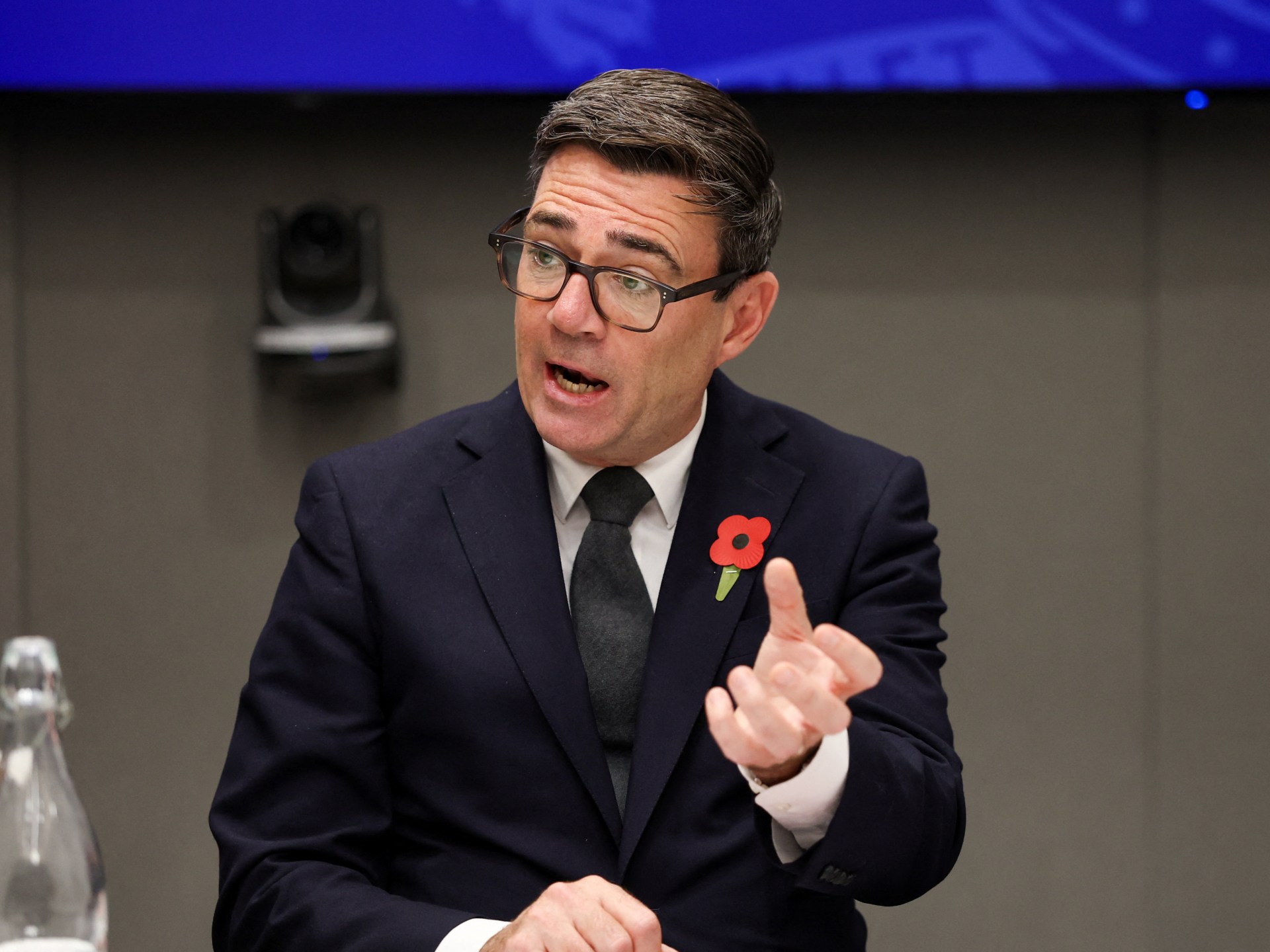
Britain’s prime minister has signalled that he is willing to consider a formal state apology for the country’s role in the transatlantic slave trade, while insisting that financial reparations will not follow. Andy Burnham set out the position days before Commonwealth leaders gather in the Caribbean, where the question of redress is expected to dominate the agenda.
Andy Burnham, the British prime minister, said he is open to hearing appeals for an official apology on behalf of the British state, a step his predecessors had resisted. He made the remarks in an article published by the Guardian on Friday, ahead of a Commonwealth leaders’ summit in Antigua and Barbuda on Sunday.
The Commonwealth is made up of 56 countries, most of them former British colonies. Its Caribbean members have spent years urging London to acknowledge the legacy of slavery and to offer redress.
In the article, Burnham proposed structured talks with the countries and campaign groups affected by slavery, including discussions on whether Britain should issue an official state apology.
“Listening to calls for a formal apology on behalf of the British state will form an important part of this process and I am open to them,” he wrote.
He also expressed “sorrow and regret” for the suffering of millions of enslaved people, but rejected the case for financial compensation.
“I do not think that British people today can be held liable for historical wrongs, however heinous, that happened in a different age under different laws and in which they played no personal part,” he said.
On the question of money, the position keeps Britain in line with previous governments, even as Burnham left the door open to an apology.
Instead, he put forward an international effort to relieve the debt burden on poorer nations by extending repayment periods and reducing interest rates. The former British prime minister Gordon Brown will help with the initiative, Burnham said, pointing out that more than 40 percent of the world’s poorest and most vulnerable countries spend more on debt interest than they do on healthcare.
Barbadian Prime Minister Mia Mottley welcomed the willingness to talk, but restated her government’s position on reparations. In a statement reported by the Guardian on Saturday, she said cooperation could also cover healthcare, education, development and fairer terms for borrowing.
Antigua’s Prime Minister Gaston Browne, who is hosting the summit, welcomed the debt initiative as well as promises of cooperation on renewable energy.
CARICOM, the regional bloc of Caribbean nations, has drawn up a ten point plan for reparations. Its demands stretch beyond cash payments to include an apology, support for health and education, and measures to address the economic and social damage slavery left behind.
The dispute came to the surface at the last Commonwealth summit, held in Samoa in 2024, when leaders called for discussions about reparations despite opposition from the then prime minister, Keir Starmer.
King Charles III is also due to attend the gathering. Buckingham Palace has said he will not issue a formal apology for slavery during the trip, despite appeals from countries in the region.
With the summit opening on Sunday, Burnham’s offer of talks gives Britain and Caribbean governments a channel for discussion, even as the central disagreement over compensation remains unresolved.



