Terra Industries has become one of the most recognisable names in African deep tech, and the Nigerian defence technology startup has earned the attention. Founded in 2024 by Nathan Nwachuku and Maxwell Maduka, the company designs and manufactures autonomous drones, sentry towers and crewless ground vehicles, all linked through its proprietary ArtemisOS platform. In August it closed a $52 million seed round, the largest of its kind in Africa. Terra shows what is possible when an ecosystem can carry more companies to that stage, but the environment around it was largely shaped for a different kind of business.
The United Nations Development Programme describes deep tech as technology built on scientific discoveries, engineering innovations and advances in research, with intensive research and development at its core. The label covers companies working on drones and robotics, semiconductor and computing technologies, biotechnology, medical devices and some forms of artificial intelligence.
Most businesses in Africa’s tech ecosystem are organised around using technology rather than creating it. A fintech company can build a payments product without manufacturing the smartphone its customers carry, just as a logistics startup can build software on top of cloud infrastructure or networks developed and run by other firms. The hardware and foundational systems already exist, and these startups apply them to market problems.
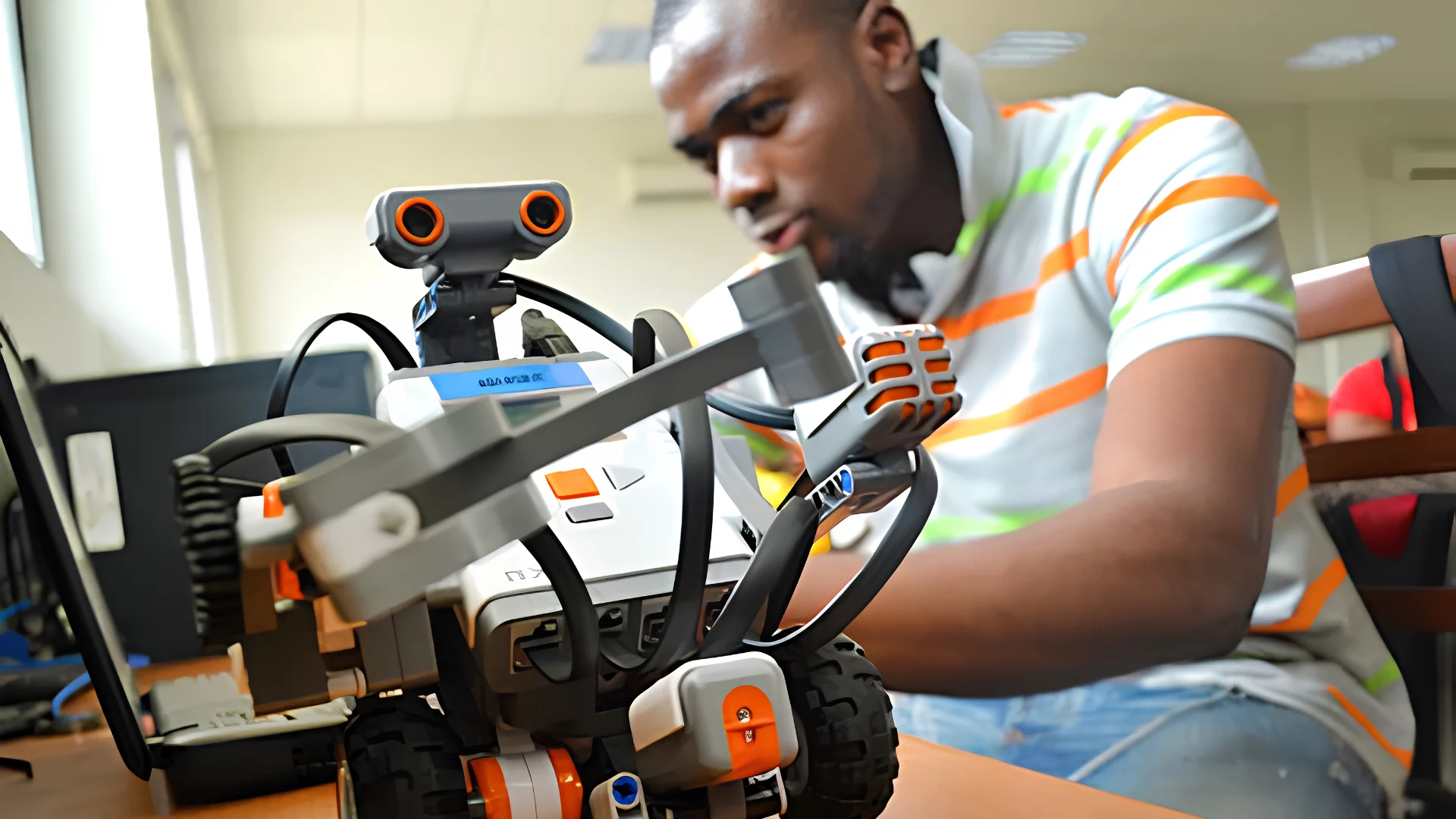
Deep tech brings that technology inside the company. Turning an engineering breakthrough into a commercially viable product can require designing and repeatedly testing prototypes, sourcing specialised components, working alongside researchers and engineers, and securing access to laboratories or manufacturing facilities.
Those demands are already surfacing as practical complaints. Chukwuemeka Afigbo, who convenes the Africa Deep Tech Foundation, a community focused on supporting deep tech builders and developing the ecosystem around them, said hardware companies in the community have raised concerns about the cost of bringing components into the country.
“The hardware folks would tell you there’s a lot of support they need that they haven’t necessarily seen. For example, like policies around the amount of money they pay to bring in components to build stuff in the country,” he told TechCabal in October.
The dependence on imports is well documented. A 2021 baseline study commissioned by the Nigerian Communications Commission found that 84% of the hardware components used in Nigeria’s telecommunications sector are imported. That list includes printed circuit boards, semiconductors, connectors, antennas and other electronic parts. For hardware companies building and testing products locally, anything that cannot be sourced at home has to be shipped in, exposing them to shipping costs, foreign exchange movements, customs procedures and import duties.
Thin footing in chips and computing
Africa’s capacity to produce some of the technologies underpinning the global economy remains limited. According to the African Academy of Sciences, the continent accounts for less than 1% of global semiconductor economic output, and its position in the industry is concentrated on design or testing.
The same constraints are becoming visible in artificial intelligence. AI is now one of the biggest technology conversations in Africa, but many of the products available to users are built on infrastructure developed elsewhere. Constructing the underlying systems calls for specialised chips, data centres, engineering talent and research capacity. Africa currently accounts for 0.6% of global data centre capacity, a figure that illustrates how much of the foundation is still missing.
Terra’s rise shows that African founders can build sophisticated hardware and attract serious capital while doing it. Whether many more follow depends on the less visible layers of the ecosystem: import policies that shape what components cost, laboratories and manufacturing capacity, and the research and computing infrastructure that deep tech companies need before they can sell anything. The ambition is no longer in question. The supporting structure around it still is.