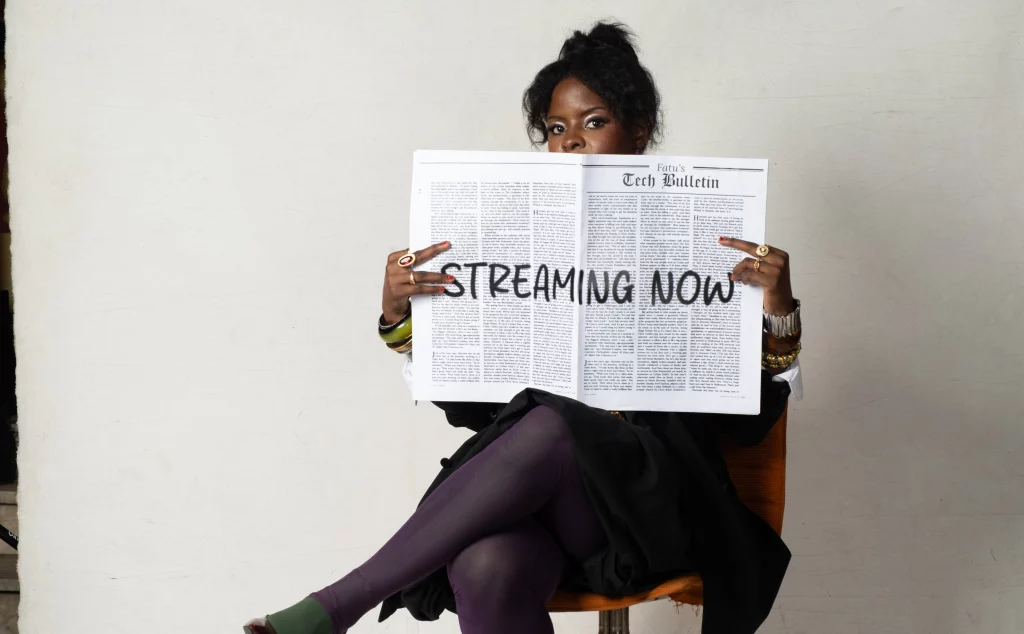
Fatu Ogwuche, the entrepreneur and former Meta executive behind Big Tech This Week, is moving her African technology media company into live video. The company is launching Tech This Week, a weekly programme that pairs a news rundown with interviews covering business, products and culture, and it will be free to watch.
The show will be funded through sponsorships, advertising and paid segments, according to Ogwuche, who founded Big Tech This Week before building out the live format. Its debut marks an expansion of the outlet’s coverage rather than a standalone project, arriving after an earlier audio series that ran on Twitter Spaces.
That earlier programme, Ogwuche said, drew more than 100,000 cumulative listeners over the course of a year and featured conversations with founders, investors and other technology professionals. The live show is intended to carry that formula onto a visual stage with a regular weekly slot.
She said the show is starting with roughly four sponsors, whose backing has supplied enough runway to sustain a year of weekly broadcasts. Ogwuche declined to say how much has been invested in the launch or to name the sponsors in an interview with TechCabal.
Her argument for the format is straightforward: a written article or a pre-recorded podcast does not always leave room for an audience to engage with the people building the companies that increasingly shape daily life.
“It’s a very important time to hear directly from the people who are essentially in the middle of your life,” Ogwuche said.
She points to TBPN, the live technology show that covers Silicon Valley, as a model for how the programme is structured. Tech This Week will aim to bring a comparable sense of immediacy to African technology coverage, with each conversation tied to developments unfolding across the industry.
The target audience spans founders, investors, operators and regulators, as well as the people who use the products being discussed. Across Big Tech This Week’s existing formats, Ogwuche said the largest share of its audience is aged between 25 and 44, with viewers and readers in Nigeria, Ghana, Kenya, South Africa and Ethiopia, along with diaspora markets that include Britain, the United States and Canada.
The launch comes as Ogwuche sees a broader range of stories emerging from African technology businesses. Over the past decade, she argues, much of the sector was devoted to solving essential problems such as helping people make payments, save money, invest and run businesses.
Those companies remain central to the industry. But she also sees founders turning their attention to gaming, entertainment, sport and other interests, which in her view opens room to report on technology through the people and cultural shifts around it, and not only through funding rounds and company announcements.
“The last decade has been building for survival,” she said. Today she sees more founders building out of “joy” and “curiosity”.
The programme intends to place established industry figures in conversation with newer founders, engineers and product managers. Ogwuche said her relationships across the sector should help the show secure guests who rarely sit down for interviews.
That access sits at the heart of the pitch. Whether the show holds its audience will depend in part on whether it can consistently bring compelling guests into a weekly broadcast and give listeners and viewers a reason to tune in as the conversation happens.
Ogwuche also intends to look past Nigeria. Speaking from Addis Ababa, where she had been meeting founders, she said the programme would seek out stories from across the continent.
“Even now with the show, it’s also going to make me be more disciplined about ensuring that we’re adequately covering milestones from other parts of the continent,” she said.
For Ogwuche, the wager is that African technology has grown varied enough, and its builders visible enough, to sustain a live weekly conversation rather than a feed of written updates. The show’s first year, backed by its small group of sponsors, will test whether audiences show up to watch that conversation unfold in real time.