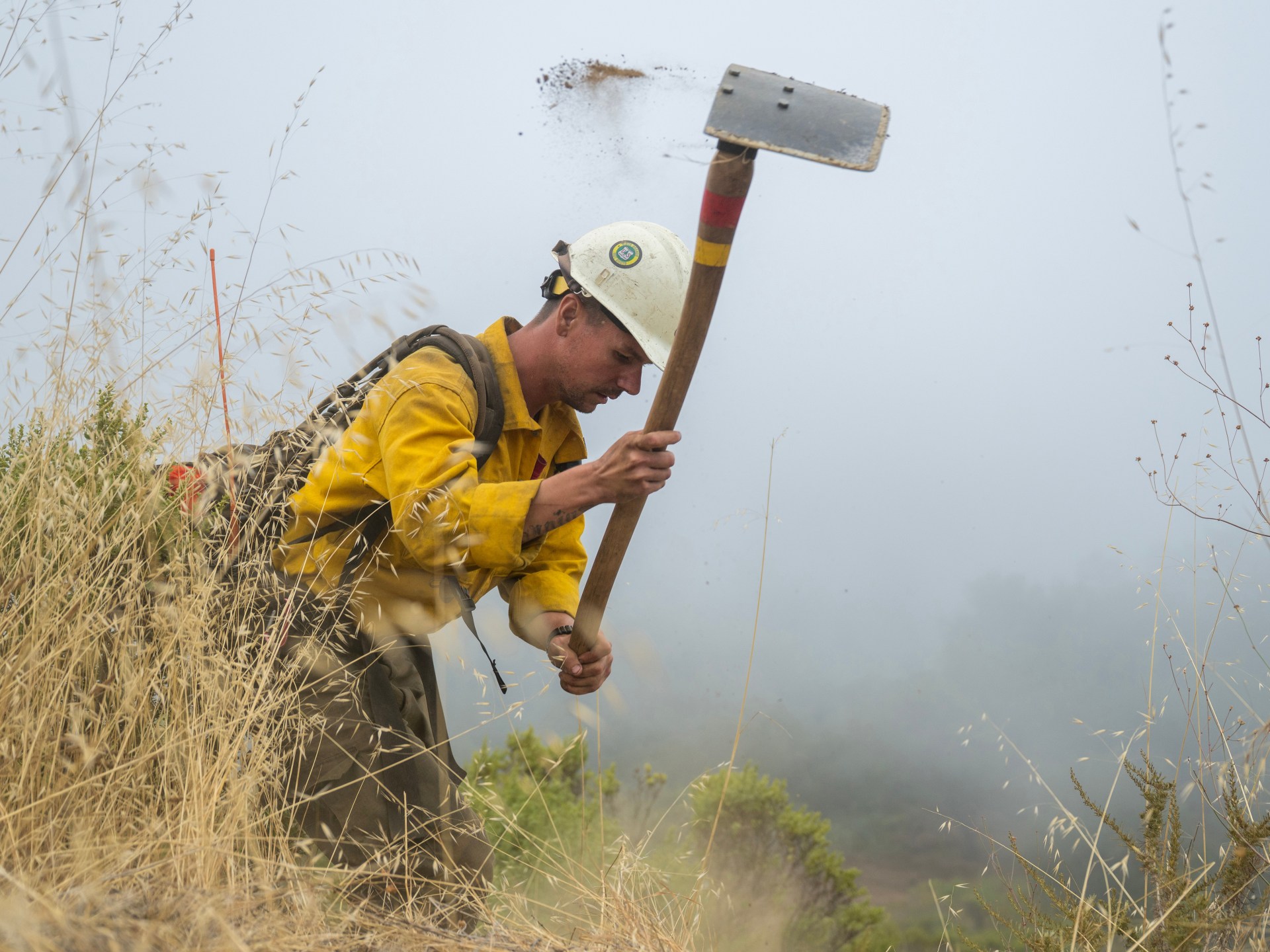
Fire crews across the western United States and Canada are working to contain a series of wildfires, including one burning along the rugged Big Sur coastline in California and another near the Nevada border.
In a Saturday update, Cal Fire reported that the Big Sur blaze, known as the Timber Fire, has consumed 4,655 acres (1,884 hectares) and is only 12 percent contained. The agency said hot, dry conditions across western North America have helped drive the fires, forcing thousands of residents from their homes. Officials also noted that wind remains a factor in the Timber Fire zone. “Any morning clouds along ridges and east of the fire should erode quickly with winds increasing in the afternoon,” Saturday’s update reads. “A warming and drying trend is predicted through the weekend and into next week.”
State parks in the area have been closed, and evacuation orders have been issued for parts of Highway 1. The famous coastal route draws visitors from around the world, and its Big Sur stretch features dramatic cliffs that drop to the sea, as well as a 24-metre (79-foot) waterfall pouring from a cliff onto the beach below.
Farther east, on the border between California and Nevada, crews are fighting the fast moving Bug Fire near Reno. Cal Fire said that blaze has burned about 93,381 acres (37,790 hectares) and is 58 percent contained. Earlier this week, Washoe County Sheriff Darin Balaam told reporters the fire had displaced at least 4,000 people, including residents of a memory care facility that had to be evacuated.
The strain on wildland firefighters has grown in recent years as climate change makes fires larger and more destructive. Political shifts have added pressure on the federal firefighting workforce. In a statement Friday, the National Federation of Federal Employees (NFFE) said budget cuts and layoffs imposed under President Donald Trump have brought new uncertainty to the workforce.
The union pointed to actions taken by the Department of Government Efficiency (DOGE), an initiative Trump pursued during his second term to slash the federal government. NFFE National President Randy Erwin said: “In the middle of fire season, DOGE and the Trump administration’s policies and actions have weakened our ability to safely fight wildfires.”
Erwin added: “DOGE recklessly cut more than 6,000 [US Forest Service] workers, thousands of them qualified wildland firefighters, and the Trump administration now threatens pointless relocations or terminations of many more, including shuttering 57 of 77 research labs critical to fire preparedness and response.”
Working conditions for wildland firefighters can vary widely by agency and employment status, but advocates say federal wildland firefighters have long faced poor pay and benefits, adding to the stress of jobs that are already dangerous.